The Ultimate Bedding Blueprint: Decoding Materials, Weaves, and Certifications for Every Sleep Surface
The more you understand about bedding, the easier it becomes to tell what truly matters and what is simply a label. This guide goes beyond the surface to explain the details that shape comfort, quality, durability, and performance, helping you make sense of luxury bedding from the inside out.
Table Of Contents
Understanding the Layers of Your Bed
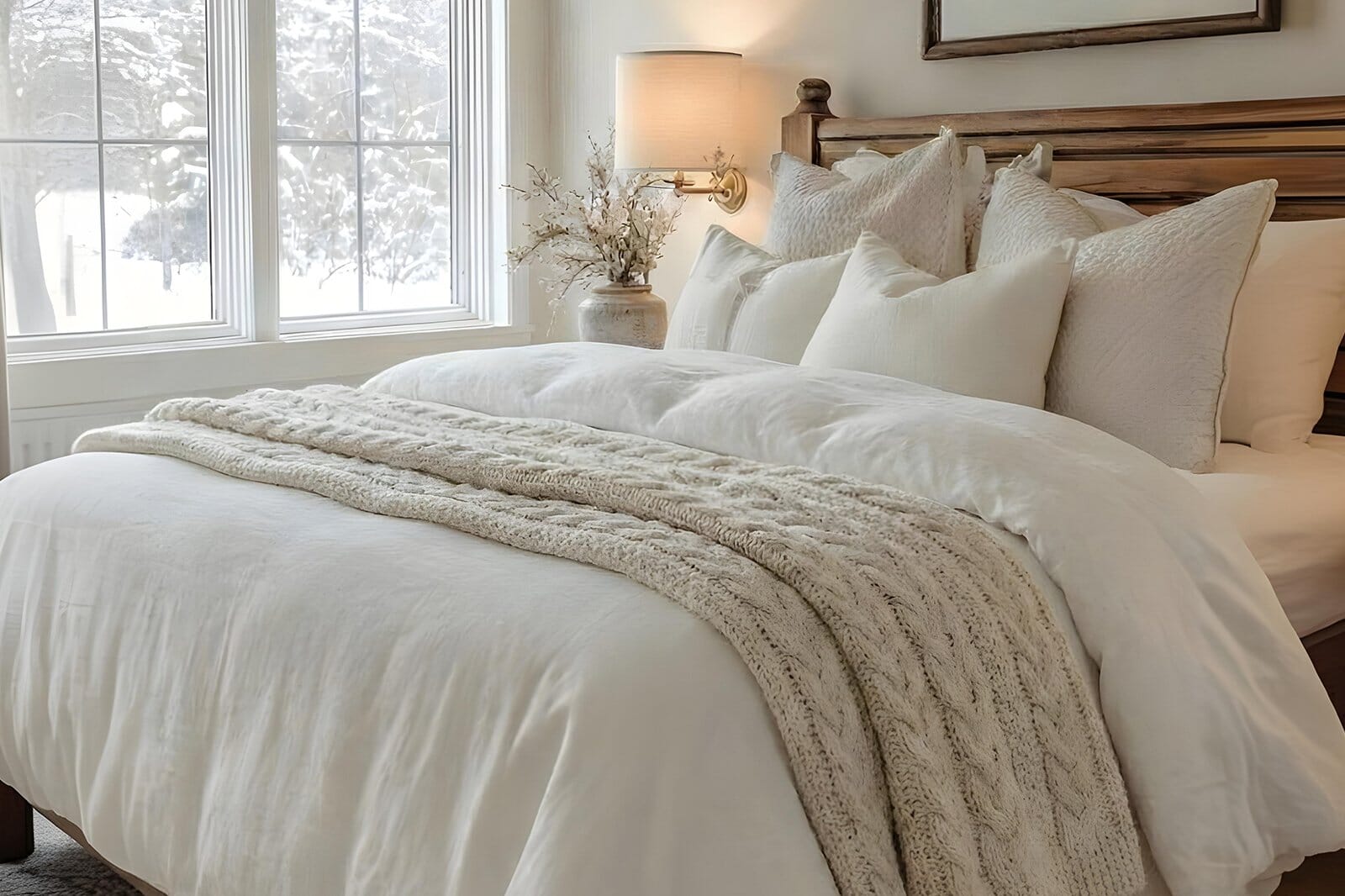
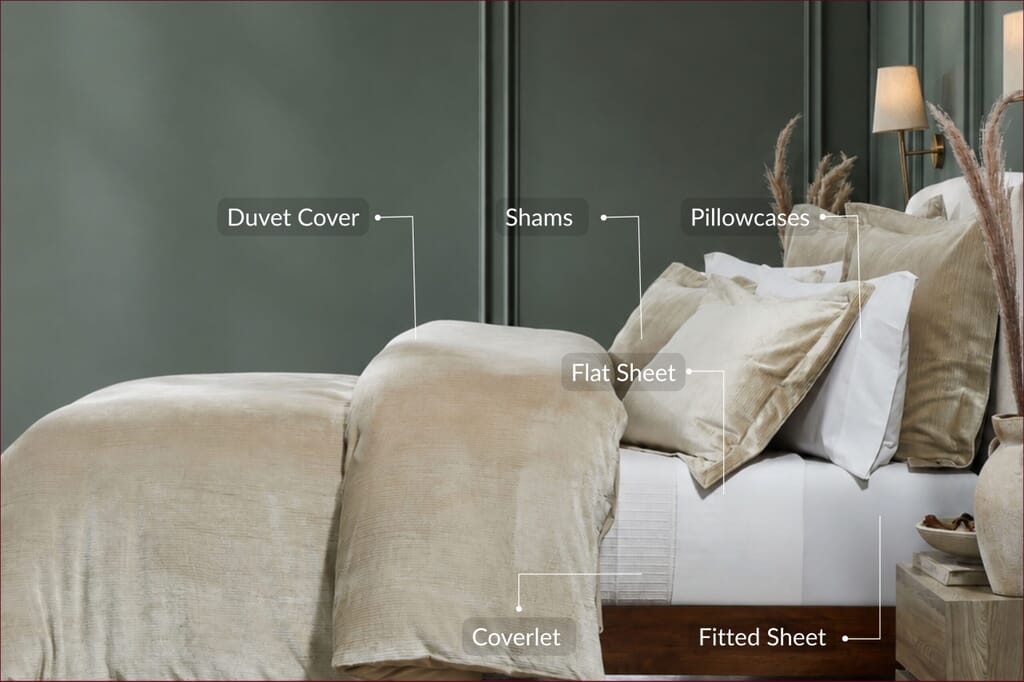
A well-made bed comes together layer by layer, with each piece serving a different purpose. It starts with a Mattress Protector, which helps protect the mattress, followed by a Mattress Topper for added cushioning and comfort. Next come the Fitted Sheet and Flat Sheet, creating the main sleep surface, while Pillowcases cover the pillows you sleep on and Shams add a more finished look. From there, Duvet Covers, Comforters, Quilts, Blankets, and Coverlets bring warmth, texture, and style to the bed. Some work as the main top layer, while others can be added for extra warmth or visual interest. Together, these layers create a bedding setup that can be adjusted to suit your comfort, sleep preferences, and the season.
How each of these layers feels and performs comes down to a few key factors. The fiber used affects softness, breathability, and warmth, while the way the fabric is woven or constructed changes its texture and feel. Density measures, such as thread count or GSM, can tell you more about its weight or construction, and safety certifications provide additional reassurance about how the material has been tested. Together, these details shape how comfortable your bed feels throughout the night.
Complete Guide to Bedding Fibers and Materials
The material used in your bedding has a big influence on how it feels against your skin, how well it handles heat and moisture, and how it holds up over time. Understanding the basic differences makes bedding labels much easier to read and compare.
Cotton: It Starts with the Length of the Fiber
Not all cotton is the same. One of the biggest differences is staple length, which simply means the length of each individual cotton fiber. In general, longer fibers can be spun into finer, smoother yarns with fewer exposed ends, helping create fabric that feels smoother and is less likely to pill.
- Short-Staple or Upland Cotton typically has fibers measuring under 1 inch in length. Because the fibers are shorter, the yarn has more exposed ends, which can make the finished fabric feel less smooth than bedding made with longer-staple cotton. It is still widely used for practical, everyday bedding.
- Long-Staple Cotton generally has fibers between 1 and 1.5 inches long. The added length allows the cotton to be spun into smoother, stronger yarns with fewer exposed ends, which can help the fabric feel softer and hold up better over time.
- Extra-Long Staple (ELS) Cotton has fibers longer than 1.5 inches and is commonly used in higher-end bedding. These longer fibers can be spun into especially fine, strong yarns, helping create fabric that feels smooth, soft, and durable. Supima, Pima, and certain Egyptian cotton varieties fall into this category, with Supima referring specifically to extra-long staple cotton grown in the United States.
Plant-Based and Regenerated Fibers
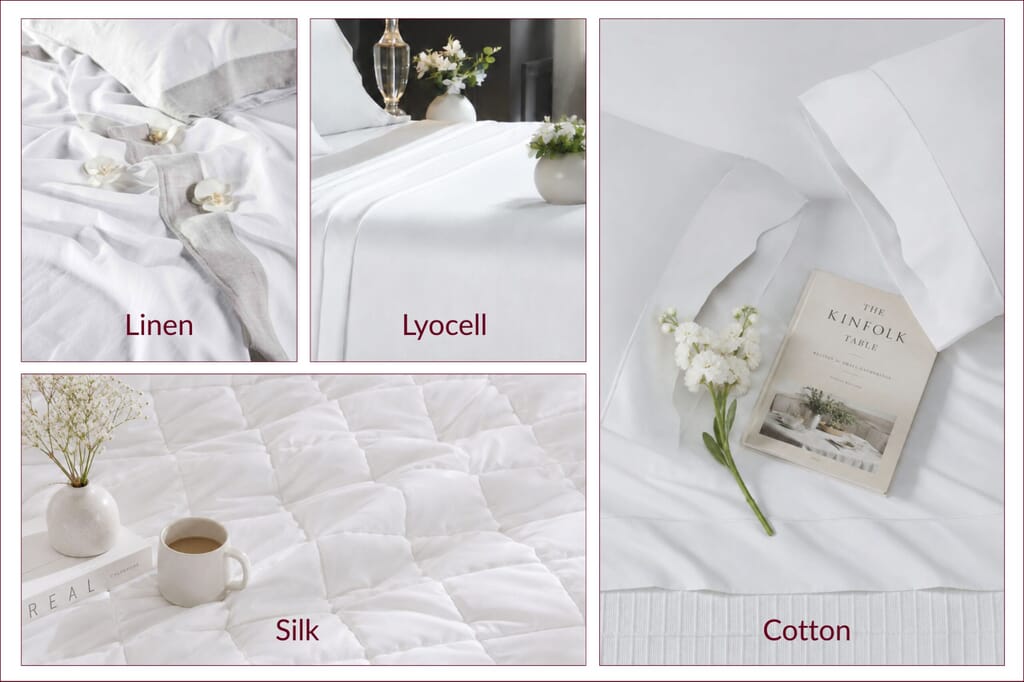
This group can be slightly confusing because some fibers come directly from plants, while others begin with plant cellulose and are transformed into fiber through manufacturing.
- Linen is made from the flax plant. It has a naturally textured, slightly crisp feel and is especially breathable. Linen also tends to soften with washing, which gives it the relaxed character many people associate with linen bedding.
- Lyocell, including branded fibers such as TENCEL™ Lyocell, is made from plant-based cellulose, commonly wood pulp. Bedding made with lyocell usually feels smooth and soft and is known for absorbing and moving moisture efficiently, which can make it comfortable for warmer sleepers.
- Bamboo Viscose or Rayon starts with cellulose sourced from bamboo, which is then processed into regenerated fiber. In the U.S., this type of textile should be described as rayon or viscose made from bamboo rather than simply “bamboo fiber.”
- Modal is another regenerated cellulose fiber, usually made from wood pulp. It is known for being soft, flexible, and smooth, which is why it often appears in bedding and fabric blends.
- Cupro is a regenerated cellulose fiber traditionally made using cotton linter, the fine fibers left around cotton seeds. It has a light, fluid drape and a smooth feel that can resemble silk.
- Hemp comes directly from the stalk of the hemp plant. Like linen, it tends to have a more natural, textured feel and can soften with use and washing.
Natural Protein Fibers
Animal-derived materials behave differently from plant fibers and are often chosen for their softness, insulation, or ability to regulate temperature.
- Mulberry Silk comes from silkworms, most commonly the Bombyx mori species, which are raised on mulberry leaves. The resulting silk is made up of long, consistent filaments that give the fabric its smooth feel, natural sheen, and refined appearance. This is why Mulberry Silk is widely used in luxury bedding, especially for Pillowcases, Sheets, and Duvet Covers.
- Tussah Silk, often referred to as wild silk, comes from silkworms that feed on a wider variety of leaves rather than only mulberry leaves. Its fibers are generally shorter and less uniform, which gives the fabric a slightly more textured feel and a more natural, less polished look than Mulberry Silk.
- Wool is sourced primarily from sheep and is one of the most widely used natural protein fibers. It is known for its warmth, durability, and ability to manage moisture, which makes it well suited to Blankets, comforters, mattress pads, and toppers. Merino wool, which comes from Merino sheep, has finer fibers and generally feels softer against the skin than traditional wool.
- Cashmere comes from the soft undercoat of cashmere goats and is especially valued for its lightweight warmth and exceptionally soft feel.
- Alpaca fiber, sourced from alpacas, is also soft, warm, and lightweight, with a smooth feel that makes it appealing for premium blankets and other bedding layers.
- Down and Feather usually come from ducks or geese, but they are not quite the same thing. Down is the soft, fluffy layer underneath the bird’s outer feathers and provides lightweight insulation and loft. Feathers contain quills, so they provide more weight and structure. Many pillows and comforters combine the two to balance softness, loft, and support.
Synthetic Fibers and Blends
Synthetic fibers are engineered rather than taken directly from plants or animals. They are commonly used because they can be durable, easy to care for, and more affordable.
- Microfiber refers to extremely fine fibers and is most commonly made from polyester, though nylon may also be used. The fine fibers give microfiber bedding a smooth, soft feel. It also tends to wrinkle less than many natural fabrics, although some microfiber can retain more heat than breathable natural fibers.
- Polyester is one of the most widely used synthetic bedding fibers. It is durable, easy to maintain, and often blended with natural fibers.
- Nylon is strong, smooth, and flexible. It is less common in traditional luxury sheets but may appear in performance bedding and fabric blends.
- Acrylic is lightweight and often developed to provide a soft, wool-like feel. It is more commonly found in blankets and throws than in sheets.
- Poly-Cotton Blends combine cotton with polyester. The cotton contributes softness and breathability, while polyester can add durability, wrinkle resistance, and easier care. The exact feel depends on the percentage of each fiber in the blend.
There is no single material that works best for every sleeper. The more useful question is what you want your bedding to do. If you prefer a smooth, durable sheet, long- or extra-long staple cotton may appeal to you. If breathability and a relaxed texture matter more, linen may suit you better. And if you prefer something exceptionally smooth or moisture-managing, silk or lyocell may be worth considering.
Weaving & Construction Techniques
Choosing the fiber is only part of the story. How those fibers are woven, knitted, brushed, or quilted can completely change the finished bedding. The construction affects everything from how cool or warm it feels to its softness, texture, drape, stretch, and even how it looks on the bed. This is why two sets of cotton Sheets can feel completely different. One may feel cool and crisp, while another feels silky and smooth, even though both are made from cotton. Knowing a few common constructions makes it much easier to understand what you are actually choosing.
Woven Constructions:
- Percale uses a simple one yarn over, one yarn under pattern. This balanced structure gives the fabric its familiar crisp feel, matte appearance, and lightweight quality. It also allows air to move through the fabric easily, making percale especially appealing to people who sleep warm or prefer that fresh, cool Sheet feel. Percale can wrinkle more naturally than smoother weaves, but it also tends to soften with washing.
- Sateen typically uses a pattern in which one yarn passes under and then over three or four yarns. Having more yarn exposed on the surface creates a smoother feel, subtle sheen, and more fluid drape than percale. It usually feels a little more substantial and less crisp, making it a good choice for someone who prefers soft, smooth bedding with a more enveloping feel.
- Twill can often be recognized by the fine diagonal lines running across the fabric. The yarns pass over and under one another in a staggered pattern rather than crossing evenly as they do in a plain weave. This construction generally gives the fabric more flexibility, drape, and resistance to wrinkling, while the diagonal structure adds subtle visual texture.
- Satin uses a similar basic weave structure to sateen, with longer sections of yarn floating across the surface before being interlaced again. The term satin is commonly associated with smooth filament yarns such as silk or synthetic fibers, while sateen is commonly made with spun yarns such as cotton. The long surface floats give satin its particularly smooth feel, fluid drape, and noticeable sheen.
- Dobby Weave is used to create small woven patterns directly within the fabric rather than printing them onto the surface. Think subtle stripes, checks, dots, diamonds, or other small geometric details. The pattern can be especially understated when a single color is used because light catches the different woven areas differently. For bedding, dobby is an easy way to add texture and detail without introducing a bold print.
- Jacquard Weave takes woven patterning further. A Jacquard loom can control individual warp yarns, allowing much larger and more intricate patterns to be created within the fabric itself. Damask and brocade are familiar examples. On bedding, jacquard can create detailed motifs, tonal designs, and richly textured surfaces without relying on a printed pattern.
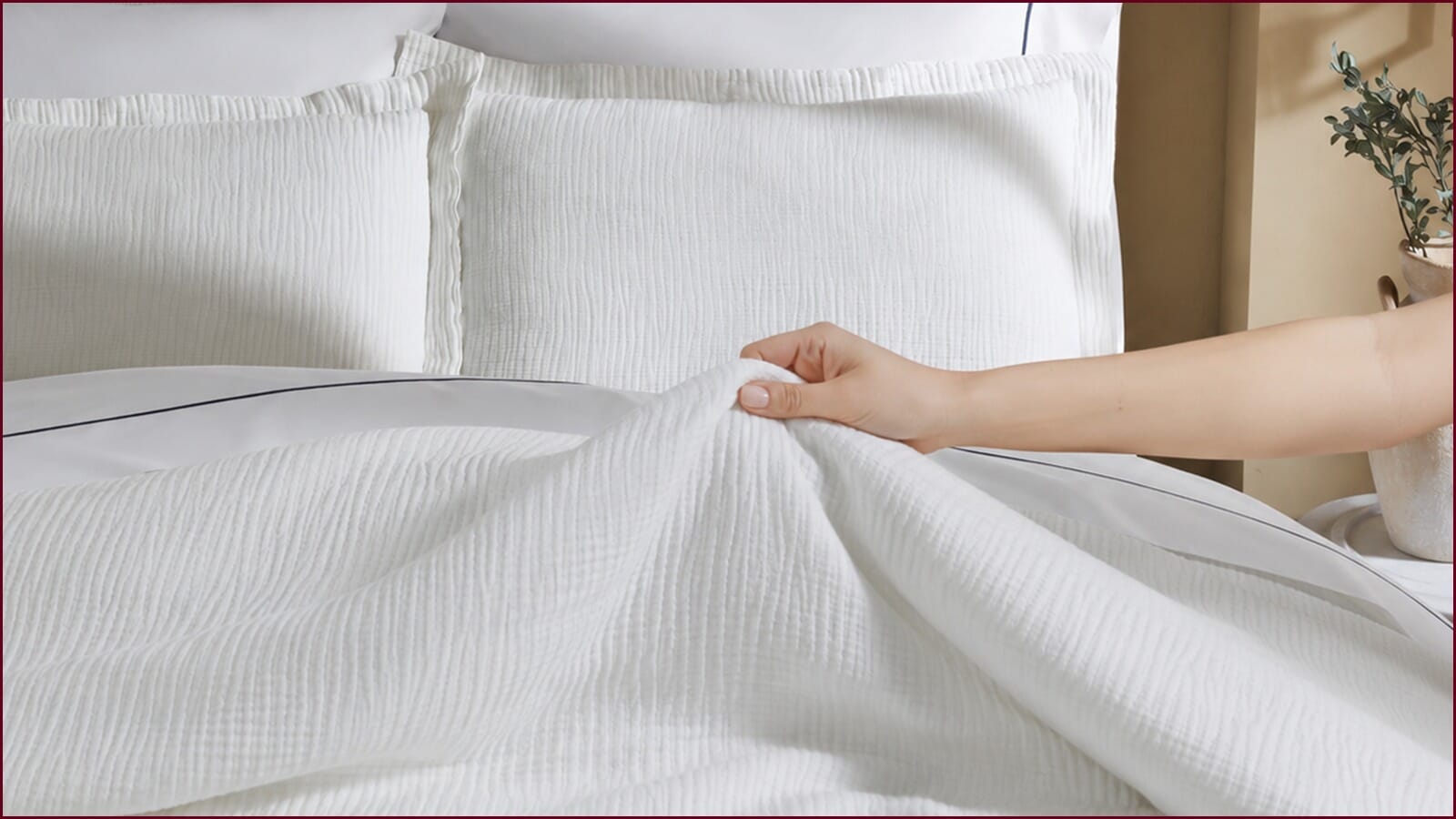
- Waffle or Honeycomb Weave creates small raised cells across the surface of the fabric. Those pockets give the material more dimension and an airy, textured feel rather than a completely flat surface. In bedding, waffle constructions are often seen in Blankets, Coverlets, and decorative layers because they add visible texture without requiring a printed design.
- Basketweave is related to a plain weave, but instead of individual yarns crossing one at a time, two or more yarns are grouped together as they pass over and under each other. This gives the fabric a more noticeable woven texture and generally a softer drape than a basic plain weave.
- Matelasse is woven to create a raised, dimensional surface that can resemble quilting even though traditional matelasse does not need a separate layer of batting or filling to create the effect. The result is texture that looks softly padded or embossed. This makes matelasse particularly well suited to Coverlets, Shams, and other top-of-bed layers where texture is part of the design.
- Gauze uses a light, relatively open construction that gives the fabric an airy feel and relaxed texture. Double Gauze places two fine layers of gauze together and connects them at small points throughout the fabric. The extra layer gives it more body and softness while keeping the fabric light, making gauze especially useful when you want a breathable layer without a heavy feel.
Knitted and Finished Constructions
Not every bedding fabric is woven. Knitting loops yarn together instead of crossing separate warp and weft yarns, which can create more natural stretch and a softer, less structured feel.
- Jersey Knit uses a single-knit construction and is often compared to the fabric of a comfortable T-shirt. It feels soft, flexible, and stretchy rather than crisp or structured. That makes Jersey Sheets and bedding appealing to people who prefer a relaxed, cozy feel that moves easily with the body.
- Interlock Knit is a double-knit construction, which makes it thicker, smoother, and more stable than basic single jersey. It still has the softness and flexibility associated with knit fabric but generally has less curling and more structure. For bedding, that can translate into a smooth, substantial feel without the crispness of a woven fabric.
- Brushed or Flannel Finishes are slightly different because brushing is a finishing process rather than a weave of its own. The surface of the fabric is gently brushed to lift fine fibers and create a soft, fuzzy layer known as a nap. These raised fibers help hold pockets of warm air close to the body, which is why flannel bedding feels noticeably warmer and cozier than a smooth cotton fabric of a similar weight.
- Quilted Construction joins two or more layers of fabric with stitching, often with a layer of filling between them. The stitching keeps the filling distributed while creating visible patterns such as channels, diamonds, or geometric designs. Depending on the filling and thickness, quilting can add anything from light cushioning to substantial warmth.
- Tufted Construction secures layers or creates raised texture at selected points rather than using continuous quilting lines across the entire surface. Tufts may appear as small stitched points, knots, loops, or raised yarn details. In bedding, this technique is often used to add texture and dimension to Quilts, Coverlets, Shams, and decorative pieces.
- The important thing to remember is that material and construction work together. Cotton percale does not feel the same as cotton sateen, and cotton jersey feels different from both. Once you know how the fabric is constructed, terms on a bedding label start telling you much more about whether the finished piece will feel crisp, silky, airy, stretchy, textured, or warm.
Industry Metrics Beyond Thread Count
Thread count gets most of the attention in bedding, but it is only part of the picture. Different materials are measured in different ways, and each number tells you something different about how the bedding may feel or perform. Let’s look at the other metrics worth knowing.
- Thread Count or TC refers to the number of horizontal and vertical threads woven into one square inch of fabric. These are known as the weft and warp threads. It is most commonly used when describing woven cotton Sheets and other fine bedding fabrics. A higher thread count means more threads have been packed into that area, but that does not automatically make the fabric softer or better. Fiber quality, yarn fineness, ply, and weave all influence the finished result too. A well-made fabric using fine, high-quality yarn can feel better than one with a much larger number printed on the label.
- Yarn Count and Ply : Before a fabric is woven, its fibers are spun into yarn. Yarn count is a measurement used to describe how fine or coarse that yarn is. The exact numbering system can vary, so the important takeaway for a shopper is simple: the yarn itself plays a major role in how light, smooth, dense, or substantial the finished fabric feels.
- Single-ply yarn is made from one strand of spun fiber. Multi-ply yarn combines two or more strands by twisting them together. Adding plies can change the yarn’s strength, structure, and thickness, but more plies do not automatically mean better quality. This matters when looking at thread count too. If several thinner strands are twisted together and each strand is counted separately, the final thread-count number can appear much higher without necessarily producing a finer fabric.
- GSM stands for grams per square meter and tells you how much one square meter of a fabric or filling weighs. In simple terms, it helps describe how light or substantial a textile is. GSM is particularly useful for materials and products where thread count tells you very little, including Linen, Flannel, Fleece, knitted bedding, Blankets, Mattress Protectors, and some Duvets and Comforters. A lower GSM generally indicates a lighter fabric, while a higher GSM means more material by weight in the same area. That can affect warmth, drape, and how substantial the bedding feels. However, GSM should ideally be compared between similar products. A 200 GSM linen fabric and a 200 GSM fleece will not feel or perform the same way because the fibers and constructions are completely different.
- Momme Weight : Silk has its own commonly used weight measurement called momme, usually written as mm. Instead of counting threads, momme tells you how much the silk fabric weighs for a standardized area. One momme is roughly equivalent to 4.3 grams per square meter. For shoppers, the simpler way to read it is that a higher momme generally means a more substantial and denser silk fabric. A lower momme silk will usually feel lighter, while a higher momme can feel heavier and more substantial. You will often see momme listed for Silk Pillowcases, Sheets, Duvet Covers, and Shams. As with thread count, though, the number should not be treated as a complete quality score. The type of silk, weave, fiber quality, and construction still matter.
- Fill Power : When shopping for a Down Duvet, Comforter, or Topper, you may come across fill power. This measures how much space one ounce of down occupies when it is allowed to loft, and it is usually expressed in cubic inches per ounce. The easiest way to think about it is as a measure of loft and insulating efficiency. Higher-fill-power down expands more and can trap more air for its weight, creating warmth without necessarily requiring as much filling. However, fill power does not tell you the total warmth of a Duvet by itself. The amount of down inside, known as fill weight, also matters. A high-fill-power Duvet with very little filling may still be lighter than one with a lower fill power but considerably more down.
- Microns : With wool, one of the numbers you may see is the micron count. A micron is one millionth of a meter, and in wool it is used to measure the diameter of an individual fiber. Here, a lower number means a finer fiber. Finer wool fibers generally bend more easily against the skin and tend to feel softer, while thicker fibers can feel coarser but may be better suited to products where durability and structure are more important. That makes micron measurements particularly useful when comparing Merino wool and other fine wool products used in Blankets, Mattress Toppers, and insulating bedding layers.
Ultimately, there is no single number that defines good bedding. Reading each metric in the right context gives you a much clearer picture than simply looking for the highest number on the label.
Certifications and Standards That Matter in Bedding
Certifications can make bedding labels much easier to understand. Instead of relying only on words such as “organic,” “safe,” or “low-emission,” these standards show that a material or product has been checked against specific requirements. The important thing is knowing what each certification actually covers, because they do not all test for the same things.
- Organic & Agricultural Origin:
- GOTS (Global Organic Textile Standard) goes beyond simply confirming organic fiber content. It covers textiles made with certified organic fibers and includes requirements for processing, environmental practices, chemicals, and working conditions throughout the textile supply chain. GOTS products labeled “Organic” must contain at least 95% certified organic fiber, while products labeled “Made with organic materials” must contain at least 70%.
- OCS (Organic Content Standard) focuses more specifically on verifying and tracing organically grown materials through the supply chain. It confirms that the claimed organic content is present in the product, but it does not set broader requirements for chemicals, social conditions, or environmental processing.
- USDA Organic relates primarily to how agricultural materials, such as cotton, are grown and certified. For textiles sold in the U.S., a product cannot simply use the USDA Organic seal unless the finished product meets USDA organic requirements. A textile may instead state that specific fibers are organically grown when those fibers meet the required certification rules.
- Chemical Safety & Human Health:
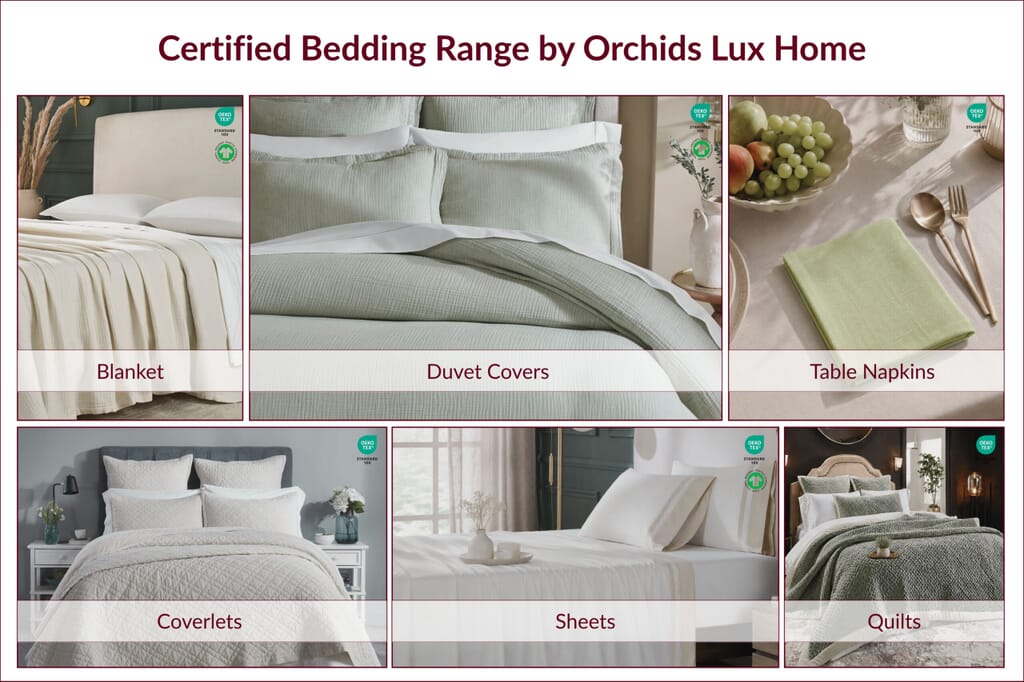
- OEKO-TEX Standard 100 tests textile components for harmful substances. The testing becomes stricter for products that have closer and more frequent contact with the skin, making this certification especially relevant for Sheets, Pillowcases, Duvet Covers, and other bedding used directly against the body.
- OEKO-TEX Made in Green adds another layer. Products carrying this label are tested for harmful substances, produced in certified facilities under environmental and socially responsible requirements, and can be traced through a unique product ID or QR code.
- CertiPUR-US is different because it applies specifically to flexible polyurethane foam, rather than the outer fabric. It is most relevant for products such as foam pillows, Mattress Toppers, mattresses, and furniture cushioning. Certified foam is tested for content, emissions, and durability, including limits on VOC emissions and certain chemicals.
- GREENGUARD / GREENGUARD Gold focus mainly on chemical emissions into indoor air. Products are tested against limits for volatile organic compounds (VOC) emissions, while GREENGUARD Gold uses more stringent criteria intended for spaces where greater sensitivity to air quality may be a concern. For bedding, mattresses, furniture, and other bedroom products, this can provide additional information about indoor emissions.
A certification is not a universal quality score, but it can give you a clearer picture of how a bedding product was made and what has been independently checked.
Conclusion
By the time you reach the end of this guide, the language of bedding should feel much easier to understand. What once looked like a jumble of labels and numbers can now help you make choices that better match how you like to sleep and live. At Orchids Lux Home, that same attention to detail shapes every layer. Explore the collection to find bedding that brings the right balance of comfort, quality, and style to your space.
FAQs
Does a higher thread count always mean better bedding?
No. Fiber quality, yarn, and weave matter just as much as thread count when it comes to softness and durability.
Is percale cooler than sateen?
Yes. Percale usually feels crisper and more breathable, while sateen feels smoother, softer, and slightly more substantial.
Is linen good for hot sleepers?
Yes. Linen is naturally breathable and has an airy feel, making it a strong option for warmer sleepers.
Is GSM the same as thread count?
No. GSM measures fabric weight, while thread count measures the number of woven threads in a square inch.
Does OEKO-TEX® certification mean bedding is organic?
No. OEKO-TEX® STANDARD 100 focuses on testing textiles for harmful substances, rather than certifying that the fibers are organically grown.