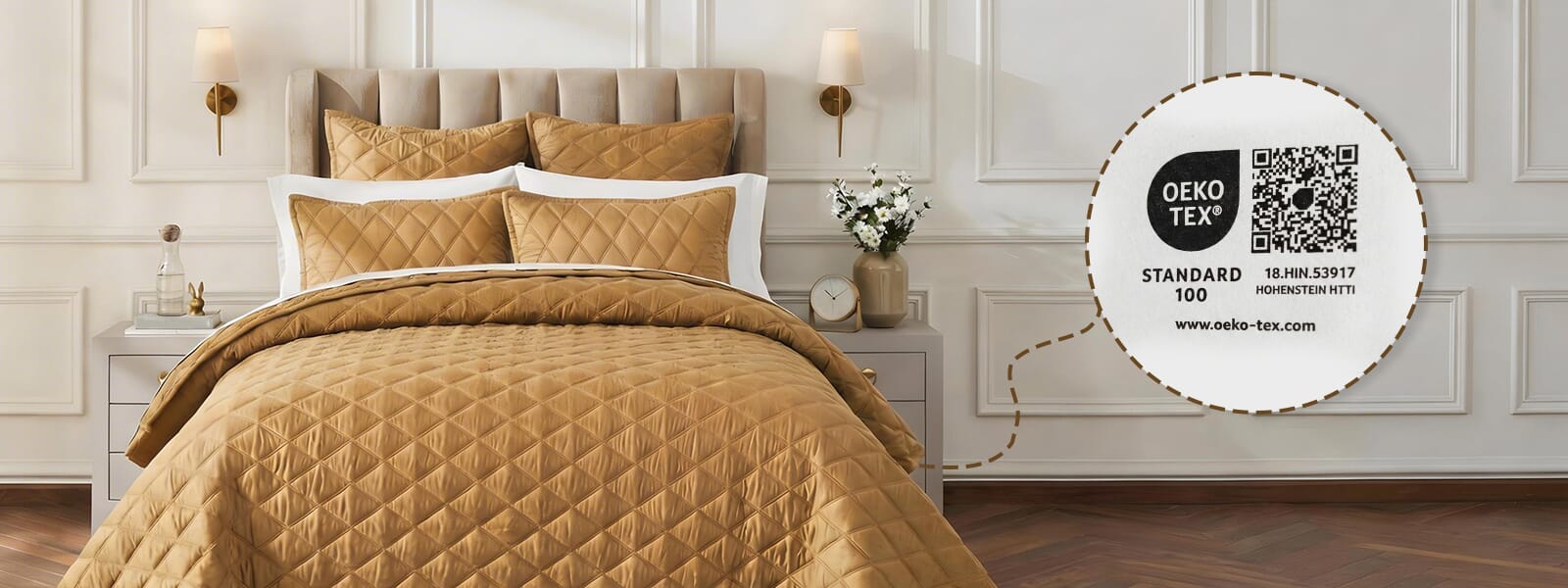
What is OEKO-TEX® STANDARD 100 And Why Does it Matter in Bedding?
From what we eat to what we put on our skin, there’s a lot around us that we think about carefully. But the funny thing is, we don’t always give the same attention to the things we’re in contact with every single day. The sheets you sleep on. The material of the jacket you wear for workouts or for lounging. Even the curtains that sit quietly in the background of your home. They’re so familiar that they almost become invisible.
But these everyday textiles matter more than most of us realize. They’re close to our bodies, they’re part of our living spaces, and they’re often with us for years. So how they’re made, what they’re treated with, and whether they’re truly safe isn’t a small detail. It’s kind of the whole point. That’s where OEKO-TEX® STANDARD 100 comes in. You’ve probably seen the name on a label and moved on. In this blog, we’ll walk you through what it means and why it’s worth paying attention to.
Table of Contents
What Is OEKO-TEX® ?
OEKO-TEX® was founded in 1992 with a clear vision: to use laboratory testing to make sure textile products are safe for human health. This led to the creation of OEKO-TEX® STANDARD 100, which has since become one of the most widely recognized and trusted certifications for product safety in the textile industry. Currently, OEKO-TEX® has grown into a strong global network of 17 independent textile and leather testing institutes. These institutes are based in Europe and Japan, supported by offices around the world, allowing OEKO-TEX® to work with brands and manufacturers across regions and supply chains.
The OEKO-TEX® International Association for Research and Testing in the Field of Textile and Leather Ecology now operates in more than 70 countries. Its institutes carry out both laboratory testing and company audits according to global guidelines. Through comprehensive product and process checks, OEKO-TEX® helps businesses manage risk, meet legal requirements, and make choices that are safer for people and better for the planet.
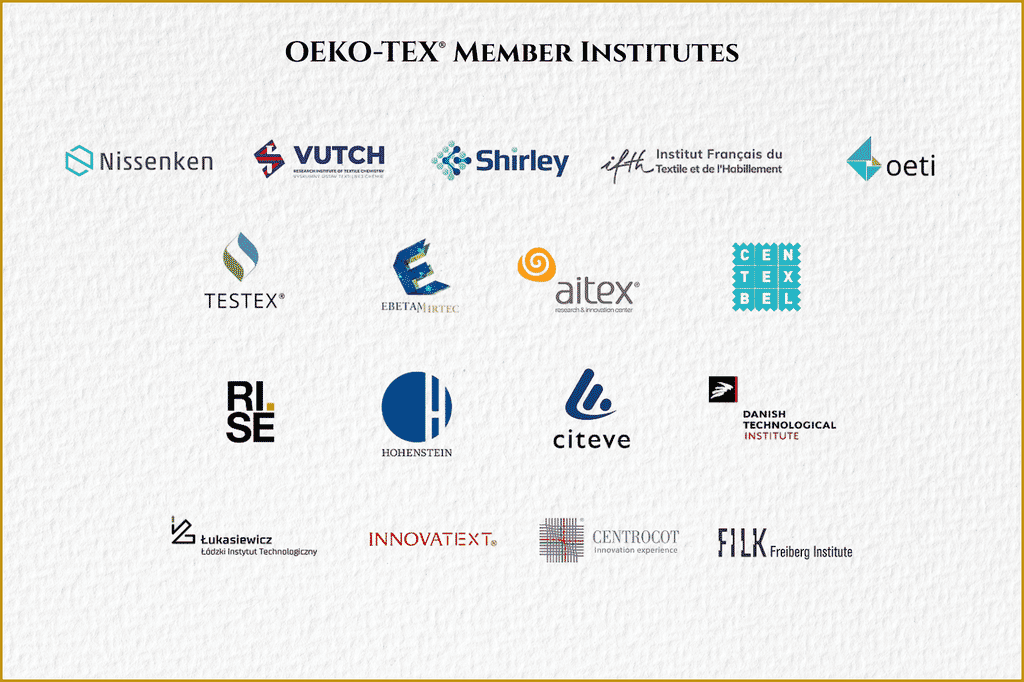
Over the years, OEKO-TEX® has introduced multiple certifications including – Standard 100, STeP, ECO PASSPORT, LEATHER STANDARD, MADE IN GREEN, Organic Cotton.
OEKO-TEX® was founded in 1992 with a clear vision: to use laboratory testing to make sure textile products are safe for human health. This led to the creation of OEKO-TEX® STANDARD 100, which has since become one of the most widely recognized and trusted certifications for product safety in the textile industry. Currently, OEKO-TEX® has grown into a strong global network of 17 independent textile and leather testing institutes. These institutes are based in Europe and Japan, supported by offices around the world, allowing OEKO-TEX® to work with brands and manufacturers across regions and supply chains.
The OEKO-TEX® International Association for Research and Testing in the Field of Textile and Leather Ecology now operates in more than 70 countries. Its institutes carry out both laboratory testing and company audits according to global guidelines. Through comprehensive product and process checks, OEKO-TEX® helps businesses manage risk, meet legal requirements, and make choices that are safer for people and better for the planet.
Over the years, OEKO-TEX® has introduced multiple certifications including – Standard 100, STeP, ECO PASSPORT, LEATHER STANDARD, MADE IN GREEN, Organic Cotton.
What Is OEKO-TEX® STANDARD 100?
OEKO-TEX® STANDARD 100 is a widely trusted label for textiles that have been tested for harmful substances. When you see the STANDARD 100 tag on a product, it means the item has been tested for harmful substances and meets OEKO-TEX® limit values.
The testing isn’t limited to just the fabric. Every component is included, right down to threads, buttons, zippers, and other accessories, and they’re checked against a list of over 1,000 potentially harmful substances. It also covers the full production journey, from the yarn and raw materials all the way to the finished product. The standards vary depending on how the product is used. The more a textile touches your skin, and the more sensitive the user (like babies), the stricter the testing requirements become. OEKO-TEX® uses globally standardized test criteria, aligns with international regulations, and reviews its harmful substance limits at least once every year to stay up to date.
OEKO-TEX® STANDARD 100 is not used for leather materials and articles, leather fibre boards, skins, or furs. These are tested under the OEKO-TEX® LEATHER STANDARD, with additional rules that apply specifically to those materials. It also does not cover chemicals like dyes, auxiliaries, or colorants on their own. Those are tested and certified under the OEKO-TEX® ECO PASSPORT.
What Is OEKO-TEX® STANDARD 100?
OEKO-TEX® STANDARD 100 is a widely trusted label for textiles that have been tested for harmful substances. When you see the STANDARD 100 tag on a product, it means the item has been tested for harmful substances and meets OEKO-TEX® limit values.
The testing isn’t limited to just the fabric. Every component is included, right down to threads, buttons, zippers, and other accessories, and they’re checked against a list of over 1,000 potentially harmful substances. It also covers the full production journey, from the yarn and raw materials all the way to the finished product. The standards vary depending on how the product is used. The more a textile touches your skin, and the more sensitive the user (like babies), the stricter the testing requirements become. OEKO-TEX® uses globally standardized test criteria, aligns with international regulations, and reviews its harmful substance limits at least once every year to stay up to date.
OEKO-TEX® STANDARD 100 is not used for leather materials and articles, leather fibre boards, skins, or furs. These are tested under the OEKO-TEX® LEATHER STANDARD, with additional rules that apply specifically to those materials. It also does not cover chemicals like dyes, auxiliaries, or colorants on their own. Those are tested and certified under the OEKO-TEX® ECO PASSPORT.
What are OEKO-TEX® product classes (Class I–IV)?
What are OEKO-TEX® product classes (Class I–IV)?
OEKO-TEX® STANDARD 100 doesn’t treat every textile in the same way, because people don’t use every textile the same. The testing is based on a product’s intended use.
Product Class I: Made for babies and toddlers up to 3 years. Like diapers and baby clothing.
Product Class II: Meant for a lot of direct skin contact, like bed linens, mattresses and shirts.
Product Class III: Little to no direct skin contact, such as jackets and belts.
Product Class IV: Home and decorative textiles, including curtains, tablecloths, wall coverings, furnishing fabrics, upholstery fabrics, and floor coverings.
Why does OEKO-TEX® STANDARD 100 Matter In Bedding?
Why does OEKO-TEX® STANDARD 100 Matter In Bedding?
Gentler on your skin
Your body rests on Sheets, your face sinks into Pillowcases, and you wrap yourself in Blankets, Coverlets, or Quilts for long stretches at a time. That’s why certification matters.
OEKO-TEX® STANDARD 100 is important because it means the product has been tested for harmful substances, so you can feel more confident about what you’re breathing against and sleeping in. It’s also a safer pick for everyone at home, including babies and young children.
Better for sensitive skin
If you have sensitive skin or allergies, finding the right bedding can feel like trial and error. Something that looks soft can still leave you feeling itchy or uncomfortable.
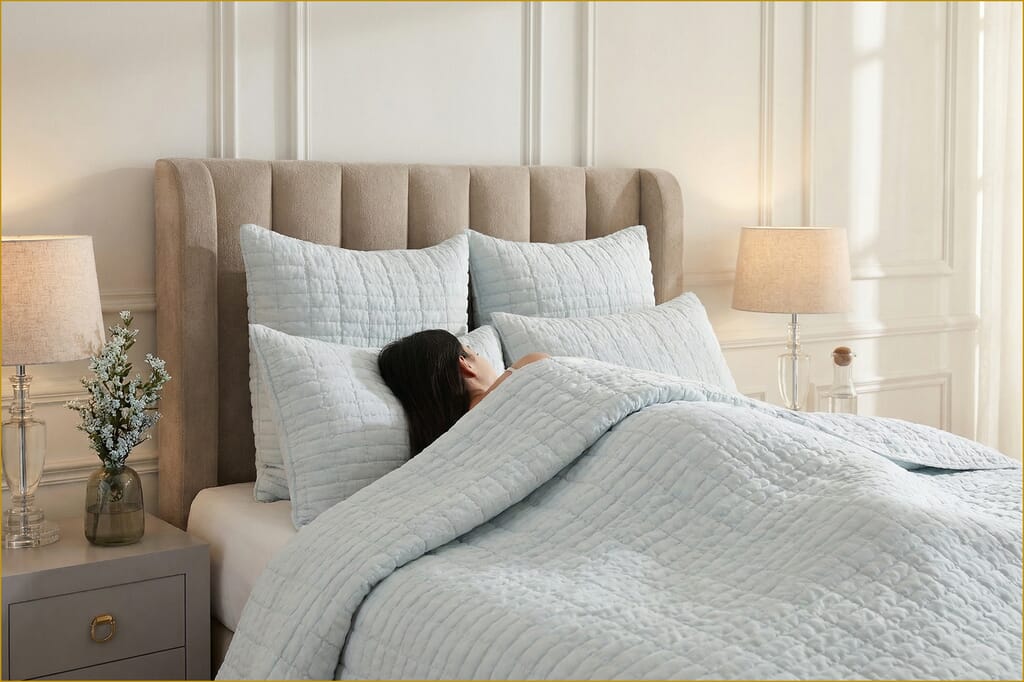
OEKO-TEX® STANDARD 100 certified bedding means fewer harsh chemicals and irritating finishes touching your skin. The result is the kind of comfort you notice, like sliding into freshly washed Sheets that feel soothing, not scratchy or “off.”
Peace of mind through third-party proof
A lot of products make big claims, but certification is different because it’s checked by an independent third party, not just said by the brand. That extra verification gives you confidence that you’re not relying on marketing words, you’re choosing bedding backed by testing.
Gentler on your skin
Your body rests on Sheets, your face sinks into Pillowcases, and you wrap yourself in Blankets, Coverlets, or Quilts for long stretches at a time. That’s why certification matters.
OEKO-TEX® STANDARD 100 is important because it means the product has been tested for harmful substances, so you can feel more confident about what you’re breathing against and sleeping in. It’s also a safer pick for everyone at home, including babies and young children.
Better for sensitive skin
If you have sensitive skin or allergies, finding the right bedding can feel like trial and error. Something that looks soft can still leave you feeling itchy or uncomfortable. OEKO-TEX® STANDARD 100 certified bedding means fewer harsh chemicals and irritating finishes touching your skin. The result is the kind of comfort you notice, like sliding into freshly washed Sheets that feel soothing, not scratchy or “off.”
Peace of mind through third-party proof
A lot of products make big claims, but certification is different because it’s checked by an independent third party, not just said by the brand. That extra verification gives you confidence that you’re not relying on marketing words, you’re choosing bedding backed by testing.
How to Check If a Product Is Truly OEKO-TEX® Certified?
Look for the label: OEKO-TEX® certified products usually come with a tag or product note that says STANDARD 100 by OEKO-TEX®.
Find and verify the certification number: Most genuine labels include a certificate number. You can enter that number on the official OEKO-TEX® website to confirm it’s real.
Check how clearly the brand talks about it: Brands that genuinely follow certifications don’t hide them. They’ll usually mention OEKO-TEX® right in the product description on their website, and often in the details section too.
OEKO-TEX® Certified Bedding by Orchids Lux Home
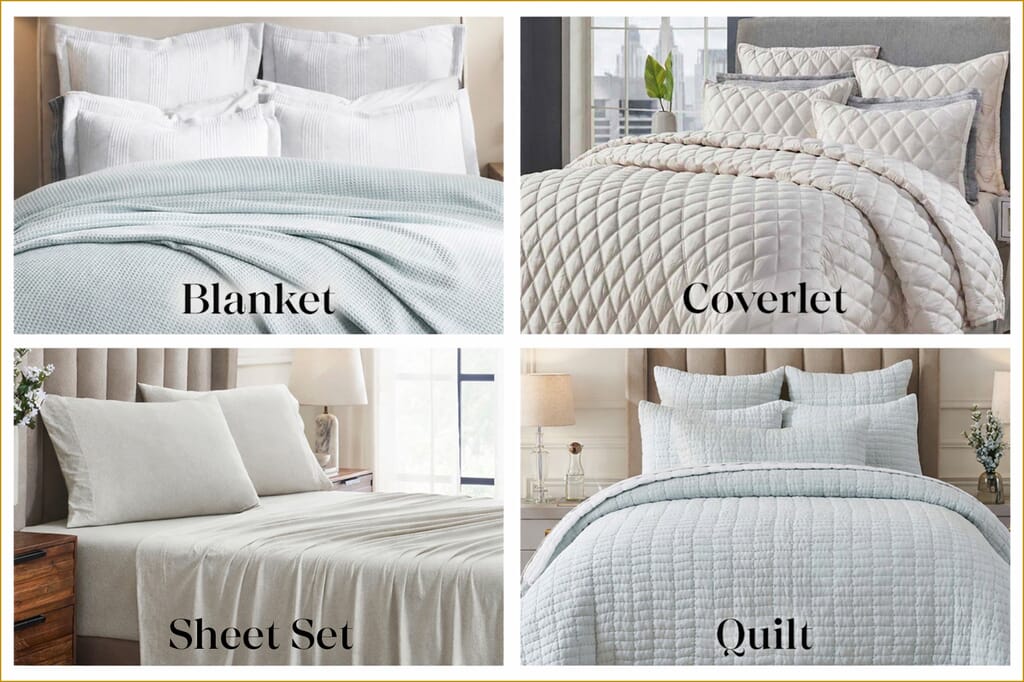
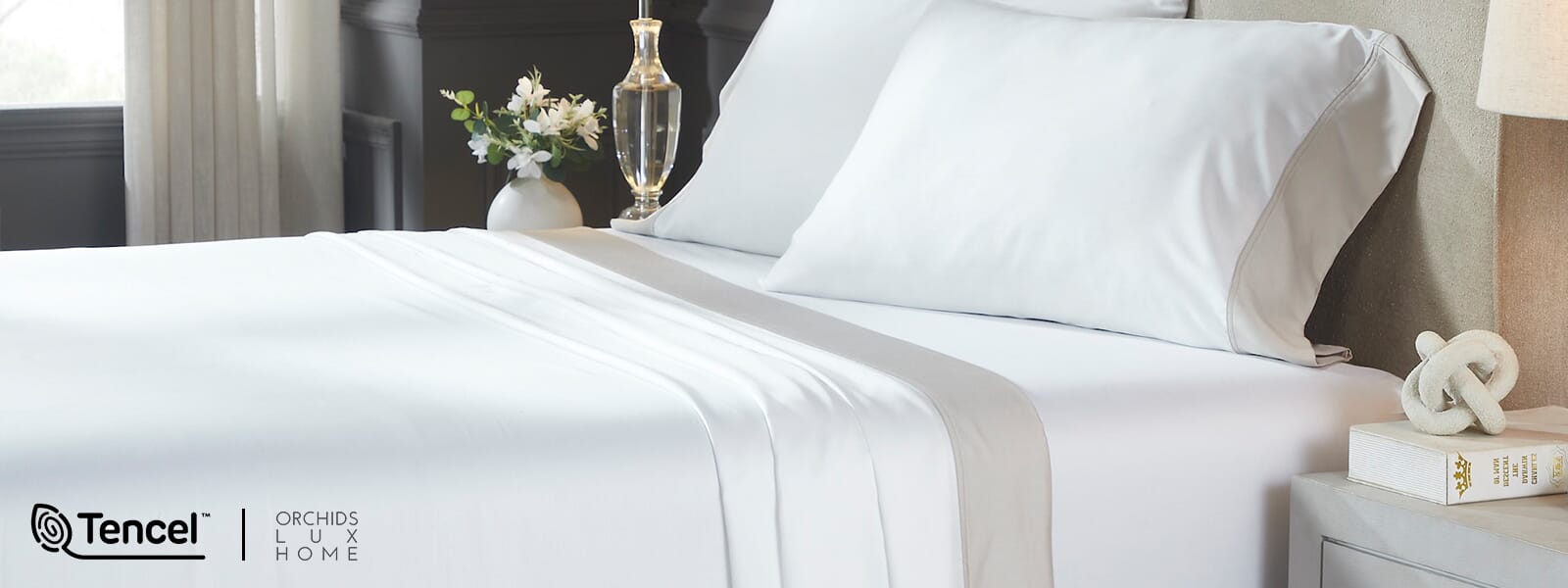
At Orchids Lux Home, OEKO-TEX® STANDARD 100 certified bedding is not just one category, it’s a full collection you can build a complete bed with. We cover everything from Sheets and Pillowcases to Blankets, Quilts, and Coverlets, plus Shams for that finished, layered look. The best part is the variety of fabrics, too. Whether you love crisp cotton, silky sateen, breathable European linen, or smooth lyocell, you can choose what feels right for your sleep and still stick with certified comfort. It makes it easy to refresh your bedding without mixing and matching across different places.
If you’re ready to start layering, explore some of our signature pieces. For Blankets, you can look at Doyle, Hudson, and Monroe Cotton Blanket for everyday softness, and add texture with the Halston Cotton Melange Sheet.
Prefer a cooler, relaxed feel? The Logan European Linen Quilt is an easy favorite for effortless layering. For a smoother finish, Merida Sateen Sheet and Pillowcase bring that classic hotel-bed vibe, while Porto Lyocell Sheet and Pillowcase feel light and breathable. Top it off with the Avalon Lyocell Coverlet for a clean, airy layer. Pick your mix, stack your layers, and settle in.
At Orchids Lux Home, OEKO-TEX® STANDARD 100 certified bedding is not just one category, it’s a full collection you can build a complete bed with. We cover everything from Sheets and Pillowcases to Blankets, Quilts, and Coverlets, plus Shams for that finished, layered look. The best part is the variety of fabrics, too. Whether you love crisp cotton, silky sateen, breathable European linen, or smooth lyocell, you can choose what feels right for your sleep and still stick with certified comfort. It makes it easy to refresh your bedding without mixing and matching across different places.
If you’re ready to start layering, explore some of our signature pieces. For Blankets, you can look at Doyle, Hudson, and Monroe Cotton Blanket for everyday softness, and add texture with the Halston Cotton Melange Sheet. Prefer a cooler, relaxed feel? The Logan European Linen Quilt is an easy favorite for effortless layering. For a smoother finish, Merida Sateen Sheet and Pillowcase bring that classic hotel-bed vibe, while Porto Lyocell Sheet and Pillowcase feel light and breathable. Top it off with the Avalon Lyocell Coverlet for a clean, airy layer. Pick your mix, stack your layers, and settle in.
Conclusion
With all the details in mind, OEKO-TEX® STANDARD 100 starts to feel less like a fancy tag and more like a simple way to choose better. When it comes to bedding, this matters because it’s something your skin is in contact with for hours, every single day. A safer, well-made fabric can make your sleep space feel cleaner, calmer, and more comfortable.
If you’re ready to put this into practice, start with your essentials, Sheets, Pillowcases, Duvet Covers, and more. Explore Orchids Lux Home and browse our range of OEKO-TEX® certified bedding pieces designed for everyday comfort and peace of mind.
FAQs
What does OEKO-TEX® STANDARD 100 actually mean?
It means the textile product has been tested for harmful substances and passed. This includes not just the fabric, but also things like threads and accessories used in the finished item.
Can OEKO-TEX® certified bedding be a good choice for sensitive skin or babies?
Yes, it can be a helpful filter, because the strictness of testing increases for products with more skin contact and for items meant for babies.
Is the OEKO-TEX® Standard 100 trustworthy?
Yes, it’s widely trusted because it’s a third-party certification based on lab testing for harmful substances, not a self-claimed label.
Is OEKO-TEX® Standard 100 organic?
No. OEKO-TEX® STANDARD 100 is about testing the finished textile for harmful substances, not how the raw materials were grown. So a product can be OEKO-TEX® certified and still not be made from organically grown fibers.
How do I check if an OEKO-TEX® STANDARD 100 label is real?
Look for the certificate number on the tag and verify it on the official OEKO-TEX® website. If there’s no number and no clear mention of certification details, treat the claim cautiously.